


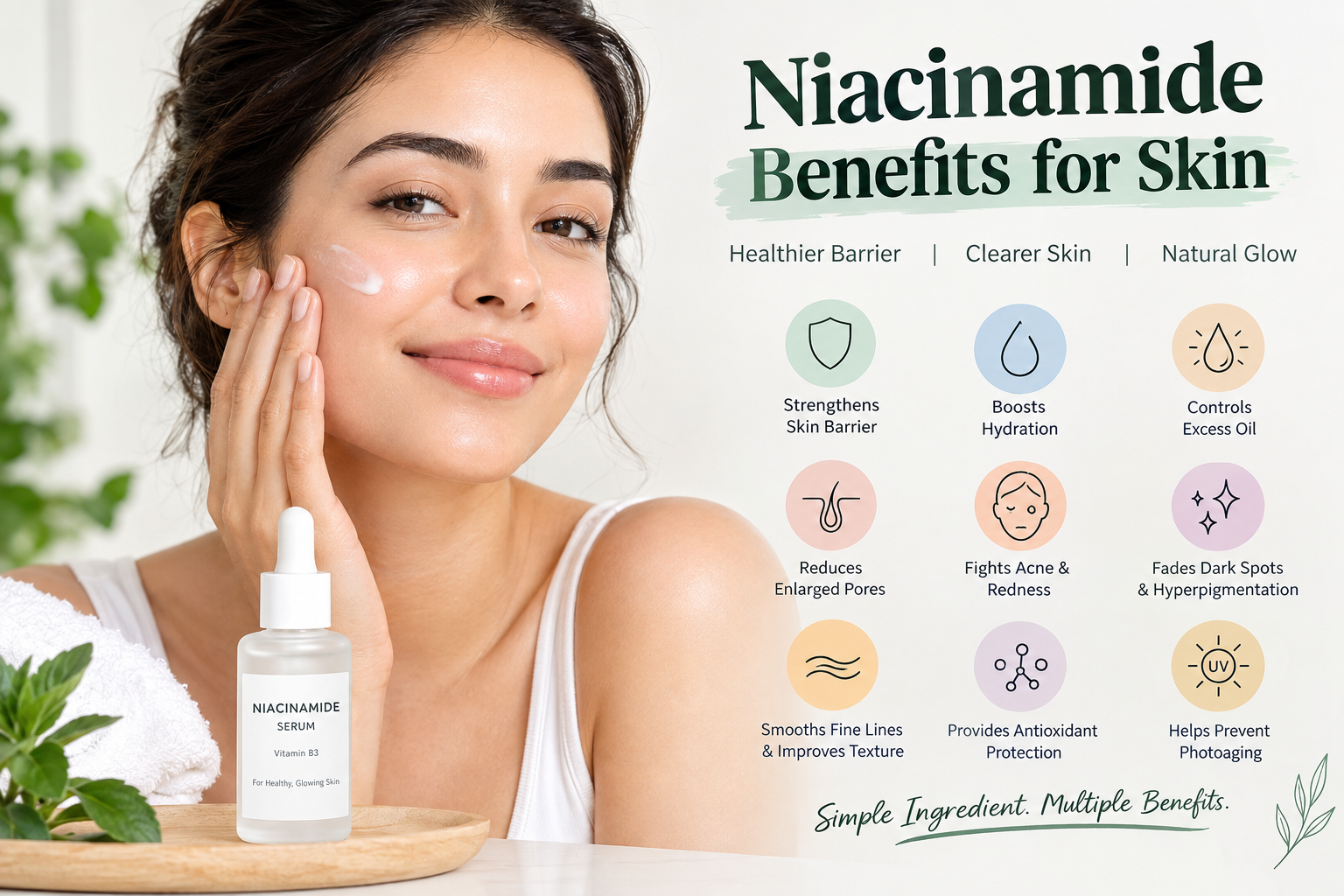
Niacinamide Benefits for Skin: Uses, Benefits, Side Effects & How to Use It
When it comes to versatile skincare ingredients, Niacinamide Benefits for Skin are hard to ignore. Also known as Vitamin B3 or nicotinamide, niacinamide is widely used in modern skincare products because it can support the skin barrier while addressing concerns such as excess oil, acne, dark spots, uneven skin tone, and visible signs of aging.
Unlike a skincare routine that relies on several strong active ingredients, niacinamide can provide multiple benefits in one simple step. It is commonly found in serums, moisturizers, cleansers, and other topical skincare products.
But what exactly does niacinamide do for your skin, and how should you use it?
Understanding the Niacinamide Benefits for Skin can help you decide whether this ingredient belongs in your daily routine. From supporting ceramide production and hydration to improving the appearance of pigmentation and pores, niacinamide can be a useful ingredient for many different skin types.
What Is Niacinamide and How Does It Benefit Your Skin?
Niacinamide is a water-soluble form of Vitamin B3, also called nicotinamide. It plays an important role in cellular processes and is used topically in skincare formulations designed to support overall skin health.
One of the key Niacinamide Benefits for Skin is its ability to support the skin’s natural protective barrier.
The outermost layer of the skin, known as the stratum corneum, helps protect the body from environmental stressors while reducing unnecessary moisture loss. A healthy skin barrier is essential for comfortable, hydrated-looking skin.
Niacinamide can support skin barrier repair and ceramide synthesis. Ceramides, free fatty acids, and cholesterol are important components of the skin barrier, helping maintain its structure and function.
This is particularly useful for people whose skin feels dry, tight, flaky, or sensitive after using too many exfoliating products.
Another reason niacinamide is so popular is its versatility. Depending on the formulation, it can be incorporated into routines for oily, dry, combination, sensitive, and acne-prone skin.

The skin barrier is one of the most important areas where niacinamide can make a difference. When the barrier is compromised, your skin may become dry, irritated, red, or unusually sensitive.
Supports Skin Barrier Repair
Supporting skin barrier repair and ceramide synthesis is one of the most recognized Niacinamide Benefits for Skin.
Niacinamide can support the skin’s lipid barrier, including ceramides, free fatty acids, and cholesterol. These components help maintain the structure of the stratum corneum.
For example, if your skin becomes dry and irritated after repeatedly using exfoliating acids, simplifying your routine and introducing a barrier-supporting ingredient such as niacinamide may be more helpful than adding another strong active.
Helps Maintain Skin Hydration
Another important benefit is its relationship with skin hydration and transepidermal water loss (TEWL).
TEWL refers to water moving from inside the skin through the epidermis and evaporating from the surface. When the skin barrier is weakened, excessive water loss can contribute to dryness and discomfort.
Niacinamide can support barrier function, while ingredients such as hyaluronic acid and moisturizers can provide additional hydration.
Niacinamide for Sensitive Skin
Niacinamide for sensitive skin can be a useful option when used in a well-formulated, appropriately concentrated product.
However, sensitive skin does not automatically tolerate every niacinamide serum. A lower concentration and a simple fragrance-free formula may be a better starting point.
Performing a niacinamide patch test and skin tolerance check before full-face application can also help you identify potential irritation.
2. Niacinamide Benefits for Acne, Oil Control & Enlarged Pores
If you struggle with oily skin, clogged pores, or frequent breakouts, niacinamide may fit particularly well into your routine.
Helps With Sebum and Oil Control
Excess sebum production and oil can make the skin appear shiny and may contribute to clogged pores.
Niacinamide is commonly included in products formulated for oily and acne-prone skin because it can help regulate the appearance of excess oil while supporting the skin barrier.
This makes niacinamide for oily and acne-prone skin a popular choice for people who want effective skincare without overly aggressive cleansing.
Improves the Appearance of Enlarged Pores
Pores are a normal part of skin anatomy and cannot be permanently eliminated. However, their appearance can become more noticeable because of excess oil, congestion, and changes in skin elasticity.
By helping with oil control and overall skin condition, niacinamide may help reduce the appearance of enlarged pores and pore visibility.
For example, someone with an oily T-zone may find that a lightweight niacinamide serum works well alongside a gentle cleanser, moisturizer, and sunscreen.
Supports Acne-Prone Skin
Niacinamide also has antioxidant and anti-inflammatory activity, making it relevant to routines designed for blemish-prone or redness-prone skin.
It is important to remember that niacinamide is not a replacement for professional acne treatment when someone has persistent or severe acne.
However, it can be a useful supporting ingredient in a routine focused on oil control, barrier health, and post-acne marks and pigmentation.
3. Niacinamide Benefits for Dark Spots, Pigmentation & Aging Skin
Another major reason people search for Niacinamide Benefits for Skin is its potential to improve the appearance of pigmentation and signs of skin aging.
Helps Improve Hyperpigmentation and Dark Spots
Hyperpigmentation and dark spot reduction are common skincare goals, particularly for people dealing with acne marks or sun-related pigmentation.
Niacinamide has been studied for its effect on melanosome transfer inhibition. Melanosomes are pigment-containing structures produced by melanocytes. Reducing their transfer to surrounding skin cells is one proposed mechanism through which topical niacinamide may help improve the appearance of uneven pigmentation.
This makes niacinamide relevant for concerns such as:
- Dark spots
- Post-acne marks
- Uneven skin tone
- Sun-related pigmentation
- Dull-looking complexion
However, pigmentation takes time to improve. Consistent sunscreen use is especially important because UV exposure can contribute to pigmentation and photoaging and UV-induced skin damage.
Supports Antioxidant and Anti-Inflammatory Activity
Our skin is exposed to environmental stressors every day. UV radiation and pollution can contribute to oxidative stress and environmental skin damage.
Niacinamide has antioxidant-related and anti-inflammatory properties that can complement a broader skincare routine.
For the best overall approach, think of niacinamide as one part of a routine that also includes sunscreen, adequate hydration, gentle cleansing, and other targeted ingredients when needed.
May Improve Fine Lines and Skin Texture
Niacinamide is also frequently used in anti-aging skincare.
With consistent use, niacinamide-containing formulations may help improve the appearance of fine lines, wrinkles, collagen-related skin changes, skin elasticity, and overall skin texture.
Rather than expecting a dramatic overnight transformation, it is more realistic to view niacinamide as a long-term supporting ingredient for healthier-looking skin.
4. How to Use Niacinamide in Your Daily Skincare Routine
Knowing the Niacinamide Benefits for Skin is only part of the equation. How you introduce it into your routine also matters.
The good news is that a niacinamide routine can be simple.
Morning Routine
A basic morning routine can include:
- Gentle cleanser
- Niacinamide serum
- Moisturizer
- Broad-spectrum sunscreen
If you have oily skin, a lightweight serum and gel moisturizer may feel more comfortable. If your skin is dry, choose a more nourishing moisturizer.
Night Routine
A simple evening routine could include:
- Cleanser
- Niacinamide serum
- Other targeted treatment, if needed
- Moisturizer
Niacinamide can generally be used for AM and PM application, depending on your product instructions and how your skin responds.
What Niacinamide Concentration Should You Choose?
Niacinamide products are available in many different concentrations.
A 2–5% niacinamide serum concentration is a practical range to consider, particularly if you are new to the ingredient.
A higher percentage does not necessarily mean better results. Some people may experience more irritation with stronger formulations.
Start slowly and pay attention to your skin rather than choosing a product simply because it has the highest percentage on the label.
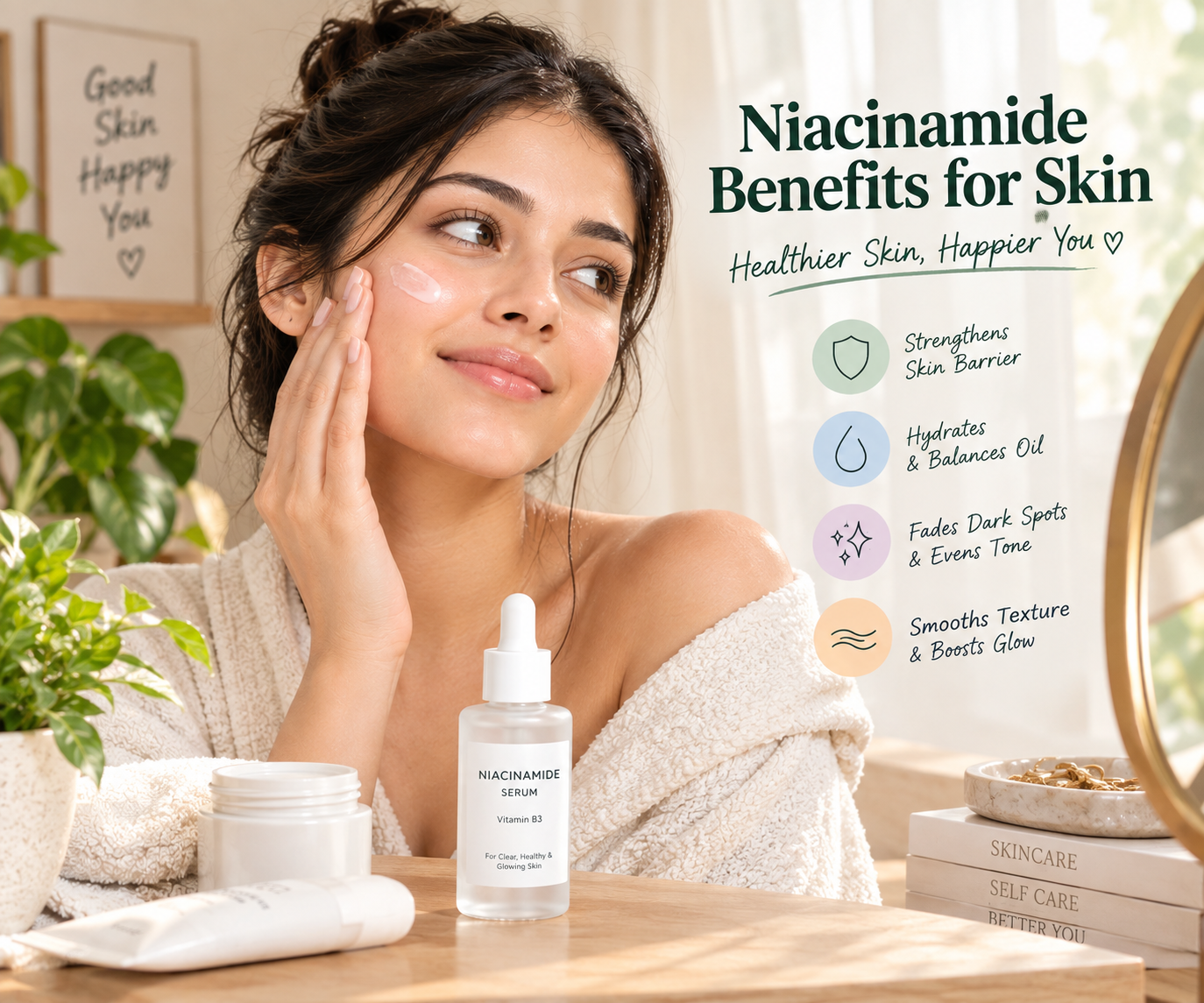
5. Can You Use Niacinamide With Other Skincare Ingredients?
One of the most useful Niacinamide Benefits for Skin is its flexibility within a broader skincare routine.
Niacinamide and Salicylic Acid
Niacinamide and salicylic acid can work well in routines designed for oily and acne-prone skin.
Salicylic acid is a beta-hydroxy acid that helps exfoliate and unclog pores, while niacinamide can support the skin barrier and help with oil-control goals.
If the combination causes dryness or irritation, reduce the frequency of exfoliation rather than forcing your skin to tolerate it.
Niacinamide and Hyaluronic Acid
Niacinamide and hyaluronic acid are commonly paired in hydrating skincare routines.
Hyaluronic acid is a humectant that attracts water, while niacinamide offers broader barrier-supporting properties.
Together, they can make sense for people looking for hydrated, comfortable-looking skin.
Niacinamide and Vitamin C
Niacinamide and vitamin C can be incorporated into the same overall skincare routine when properly formulated and tolerated.
There is no need to avoid the combination simply because of older skincare myths. However, if you have sensitive skin, introducing one active at a time makes it easier to identify irritation.
Niacinamide and Retinol
Niacinamide and retinol can complement one another in an anti-aging or acne-focused routine.
Retinol is a vitamin A derivative commonly used to target concerns such as fine lines, uneven texture, and acne, while niacinamide can provide barrier-supporting benefits.
If you are new to retinol, introduce it gradually and use sunscreen during the day.
Niacinamide and Alpha Arbutin
Niacinamide and alpha arbutin are frequently found together in products targeting uneven skin tone and pigmentation.
Because both are commonly used in brightening routines, avoid creating an overly complicated routine with numerous active ingredients at once.
Niacinamide and Kojic Acid
Niacinamide and kojic acid may also be combined in pigmentation-focused skincare products.
Kojic acid is used in cosmetic formulations for its skin-brightening properties, while niacinamide can support barrier function and the appearance of uneven tone.
As always, skin tolerance matters more than using multiple actives simultaneously.
Niacinamide Side Effects and How to Avoid Irritation
Although niacinamide is tolerated by many people, irritation can still occur.
Possible niacinamide side effects and irritation include:
- Redness
- Burning or stinging
- Itching
- Dryness
- Increased sensitivity
Irritation may be more likely when using a high-concentration product or combining several potentially irritating active ingredients.
If your skin reacts, simplify your routine and allow your skin to recover before introducing additional products.
A patch test can also be useful when trying a new topical niacinamide skincare product.
Most importantly, remember that irritation is not a sign that a product is necessarily working better. A consistent routine that your skin tolerates is usually more sustainable.
Conclusion: Understanding the Real Niacinamide Benefits for Skin
The popularity of niacinamide makes sense when you look at how versatile the ingredient is. The Niacinamide Benefits for Skin include supporting the skin barrier, helping maintain hydration, regulating the appearance of excess oil, improving the appearance of pores, and supporting more even-looking skin.
It is also relevant to concerns such as hyperpigmentation, post-acne marks, fine lines, uneven texture, redness, and photoaging.
For most beginners, there is no need to build an extremely complicated routine. A well-formulated niacinamide product, gentle cleanser, moisturizer, and daily sunscreen can provide a solid foundation.
If you are considering adding niacinamide to your skincare routine, start with a suitable concentration, introduce it gradually, monitor your skin’s tolerance, and stay consistent.
The goal of skincare is not to use the most products—it is to build a routine that works comfortably with your skin over time.
Follow on Instagram